

International air travel with a patient is not like ordinary flying. How to travel with a patient by air requires medical approval, airline coordination, careful documentation, emotional readiness, and thoughtful planning. Whether the traveler is elderly, chronically ill, disabled, post-surgery, or medically fragile, international patient travel by flight can be safe and dignified—when done correctly.
This expert guide explains flying with a medical patient step by step in simple, human-friendly language. It is fully SEO-friendly, AdSense-safe, and written to help families, caregivers, and medical coordinators plan with confidence.
Plan smarter. Travel better. Our Travel Guides & Tips section gives you everything you need — from detailed guides and easy itineraries to budget advice and safety tips. Explore expert insights below and make every trip smooth, affordable, and unforgettable.
Understanding if the Patient Is Fit to Fly
Before tickets, visas, or packing, the first and most critical step in air travel with a sick patient is confirming medical fitness to fly.
Why Fitness to Fly Is Essential
Aircraft cabins operate at reduced pressure, equivalent to high altitude. This can cause:
Lower oxygen levels
Increased strain on the heart and lungs
Higher risk of blood clots during long sitting
Fatigue and dehydration
For healthy travelers, these are manageable. For patients, these changes can be dangerous without preparation.
Medical Conditions That Need Extra Evaluation
Special attention is required if the patient has:
Heart disease or heart failure
Lung conditions (COPD, asthma, pulmonary fibrosis)
Recent surgery or fractures
Stroke, paralysis, or neurological disorders
Cancer or ongoing chemotherapy
Kidney failure or dialysis needs
Oxygen dependency
Advanced age with multiple illnesses
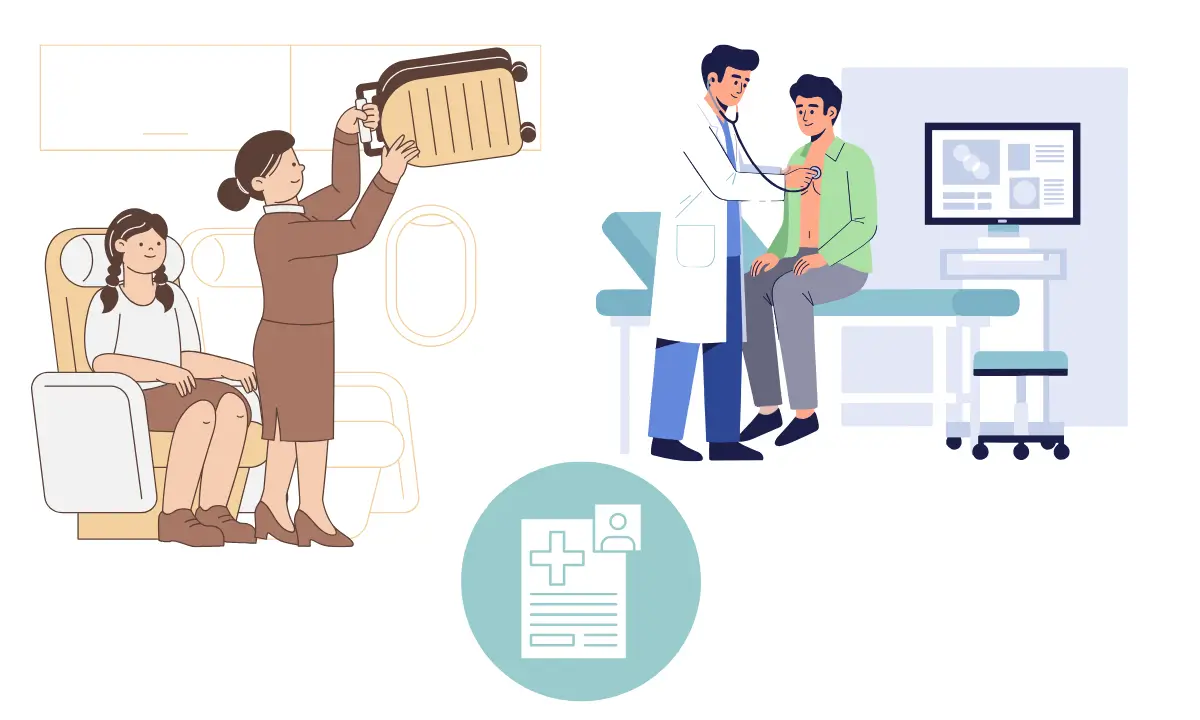
Doctor’s Medical Clearance
A treating physician must issue a Medical Fitness to Fly Certificate, including:
Current diagnosis and stability status
Medication list and dosages
Oxygen or equipment needs
Emergency instructions
Without this clearance, airlines may legally refuse boarding.
Choosing the Right Airline for International Patient Travel
Not all airlines handle international patient travel by flight equally. Choosing wisely can prevent serious problems.
Travelling with an Infant First Time: 10 Expert Tips Every Parent Needs to Know
What to Look for in an Airline
Experience with medical passengers
Availability of onboard oxygen
Wheelchair and stretcher services
Trained cabin crew
Clear medical assistance policies
Informing the Airline in Advance
You must notify the airline 48–72 hours before departure if the patient:
Needs a wheelchair or mobility help
Requires oxygen
Cannot walk independently
Needs medical equipment
Requires a stretcher
Most airlines will request medical forms for approval.
Understanding MEDIF Forms (Medical Information Forms)
What Is a MEDIF Form?
A MEDIF form allows the airline to assess whether flying with a medical patient is safe and what support is required onboard.
Who Completes the MEDIF?
Part A: Passenger or caregiver
Part B: Treating doctor (signed and stamped)
Important Tip
Submit MEDIF forms early. Approval may take 24–72 hours, sometimes longer for complex cases.
Booking the Right Seat and Ticket Type
Best Seating Options for Patients
Aisle seats for easier movement
Bulkhead seats for extra legroom
Seats near restrooms
Emergency exit rows are not permitted for medical passengers.

Premium Economy or Business Class
For long-haul air travel with a sick patient, these classes offer:
More space and comfort
Better recline
Reduced physical strain
Easier caregiver access
Some airlines also offer stretcher services at additional cost.
Oxygen and Medical Support During the Flight
Oxygen Requirements
Personal oxygen cylinders are not allowed
Airline-provided oxygen must be pre-booked
Portable Oxygen Concentrators (POCs) are allowed only if airline-approved
Confirm:
Flow rate
Duration
Backup arrangements
Medical Devices Allowed
CPAP machines
Nebulizers
Glucometers
Blood pressure monitors
Always carry devices in hand luggage with prescriptions.
Preparing Medical Documents for International Travel
Keep multiple copies (printed and digital) of:
Passport and visa
Medical Fitness to Fly Certificate
Approved MEDIF form
Medical summary and history
Prescriptions and recent reports
Health insurance documents
Doctor contact details (home and destination)
These may be checked during check-in, transit, immigration, or hospital admission.
Benefits and Uses of Comprehensive Travell Insurance
International Medical Travel Insurance
Never attempt how to travel with a patient by air internationally without proper insurance.
Insurance Must Cover
Pre-existing conditions (essential)
Emergency hospitalization
ICU care
Medical evacuation
Air ambulance (if required)
Repatriation
Always declare existing illnesses to avoid claim rejection.
Managing Medications for International Flights

Medication Planning
Carry medicines for 7–10 extra days
Keep them in original packaging
Carry prescriptions using generic names
Never pack critical medicines in checked luggage
Special Medications
Insulin
Injections
Liquid medicines
Check destination customs rules for quantity and controlled drug regulations.
Managing Comfort on Long-Haul Flights
Preventing Blood Clots (DVT)
Move legs and feet regularly
Walk when possible
Wear doctor-approved compression stockings
Hydration and Positioning
Drink water regularly
Avoid alcohol and excess caffeine
Use neck pillows and lumbar support
Change sitting position often
Food and Diet Management
Airline meals may not suit all patients.
Helpful Tips
Request special meals (diabetic, renal, low-salt)
Carry light, safe snacks
Avoid heavy or spicy foods
Meal timing is crucial for diabetic and kidney patients.
Infection Prevention During International Travel
Patients often have reduced immunity.
Precautions
Wear masks in crowded areas
Use hand sanitizer frequently
Avoid unnecessary contact
Clean tray tables and armrests
These simple steps significantly reduce infection risk.
Emotional and Psychological Support
International travel can cause anxiety, confusion, or fear.
How Caregivers Can Help
Explain steps calmly
Avoid rushing
Offer reassurance
Maintain patience and empathy
A calm caregiver creates a calm patient.
Traveling with Elderly Patients
Elderly patients often face:
Balance issues
Memory problems
Faster fatigue
Special Tips
Avoid long layovers
Choose daytime flights
Use airport assistance
Never leave them alone
Hiring a Medical Escort or Nurse
For serious conditions, a professional medical escort can be invaluable.
Benefits
Continuous monitoring
Medication administration
Emergency handling
Peace of mind
Ideal for ICU transfers, post-surgery patients, cancer patients, or bedridden individuals.
Arrival and Post-Flight Care
After Landing
Arrange wheelchair assistance
Avoid long queues
Transfer smoothly to accommodation or hospital
Post-Travel Monitoring
Allow rest for 24–48 hours
Monitor vital signs
Resume medication schedule
Contact a local doctor if needed
Why I Wrote This Guide
I wrote this guide because most travel articles online only repeat the same basic information. As a traveler, I felt there was a need for a simple, honest, and practical guide that actually helps people plan better instead of confusing them.
🔹 Who This Guide Is For
This guide is for first-time travelers, families, budget travelers, and anyone who wants clear information without exaggerated promises. If you want realistic tips, expected costs, and practical advice, this guide is written for you.
🔹 Common Mistakes I’ve Seen People Make
Many travelers make mistakes like visiting during the wrong season, underestimating costs, or relying only on social media reels. I have included these points so readers can avoid common travel disappointments and plan more confidently.
Frequently Asked Questions (FAQs)
Is it safe to fly with a sick patient internationally?
Yes, international air travel with a sick patient can be safe when done with proper medical planning and professional guidance. The most important requirement is medical clearance from the treating doctor, confirming that the patient is stable enough to fly. Airlines also play a key role by reviewing medical forms and approving any special assistance needed during the journey.
Safety depends on several factors, including the patient’s condition, flight duration, oxygen needs, mobility level, and the presence of a caregiver or medical escort. When these factors are carefully evaluated and managed, air travel with a medical patient can be completed without complications. Rushing travel without preparation, however, increases risk and should always be avoided.
Do airlines provide oxygen for patients during international flights?
Most major international airlines do provide onboard medical oxygen, but it is not automatic and must be arranged in advance. Passengers must submit medical documentation, usually through a MEDIF form, stating the required oxygen flow rate and duration.
Some airlines also allow approved Portable Oxygen Concentrators (POCs), while others only permit airline-supplied oxygen. Personal oxygen cylinders are generally not allowed for safety reasons. Because policies differ between airlines, it is essential to confirm oxygen availability, charges, and backup arrangements well before travel. Proper oxygen planning is a critical part of flying with a sick patient safely.
Can a bedridden patient travel by commercial flight?
Yes, a bedridden patient can travel internationally on a commercial flight, but special arrangements are required. Many airlines offer stretcher services, where multiple seats are reserved and modified to allow the patient to lie flat throughout the journey. This option must be approved by the airline’s medical team and involves additional cost.
In cases where the patient requires monitoring, medication, or assistance during the flight, a professional medical escort or nurse is strongly recommended. With the right setup, documentation, and medical supervision, even patients who cannot sit or walk can safely complete international patient travel by flight.
Is medical insurance mandatory for international patient travel?
While not always legally mandatory, medical insurance is strongly recommended and often essential when traveling internationally with a patient. Medical emergencies abroad can be extremely expensive, especially if hospitalization, ICU care, or emergency evacuation is required.
The insurance policy should clearly cover pre-existing medical conditions, which many standard policies exclude unless declared in advance. Good coverage provides financial protection, access to quality care, and peace of mind for both the patient and caregiver. Traveling without insurance places the patient and family at significant financial and medical risk.
How early should airlines be informed about a medical condition?
Airlines should be informed at least 48 to 72 hours before departure, but earlier notification is always better. This allows enough time for medical form review, internal approvals, and arrangement of special services such as wheelchairs, oxygen, or stretcher support.
For complex medical cases, airlines may require additional documentation or clarification from the treating doctor. Late notification can lead to denied boarding or last-minute stress. Early communication ensures a smoother, safer experience when planning air travel with a sick patient.
Should elderly patients always have a companion during international flights?
Yes, elderly patients should always travel with a companion, especially on international flights. Aging often comes with reduced mobility, slower reaction times, fatigue, memory issues, and increased vulnerability to dehydration or confusion during long journeys.
A companion helps with medication management, mobility, communication with airline staff, and emotional reassurance. In unfamiliar airport environments, having trusted support greatly reduces stress and risk. For elderly individuals with medical conditions, traveling alone internationally is not recommended under any circumstances.
Conclusion: Safe International Air Travel Is Possible
How to travel with a patient by air is challenging—but absolutely manageable. With preparation, medical approval, airline coordination, insurance, and emotional care, international patient travel by flight can be safe, respectful, and comfortable.
Key principles to remember:
Preparation over speed
Safety over cost
Comfort over convenience
When care leads the journey, even crossing borders becomes possible with confidence.